
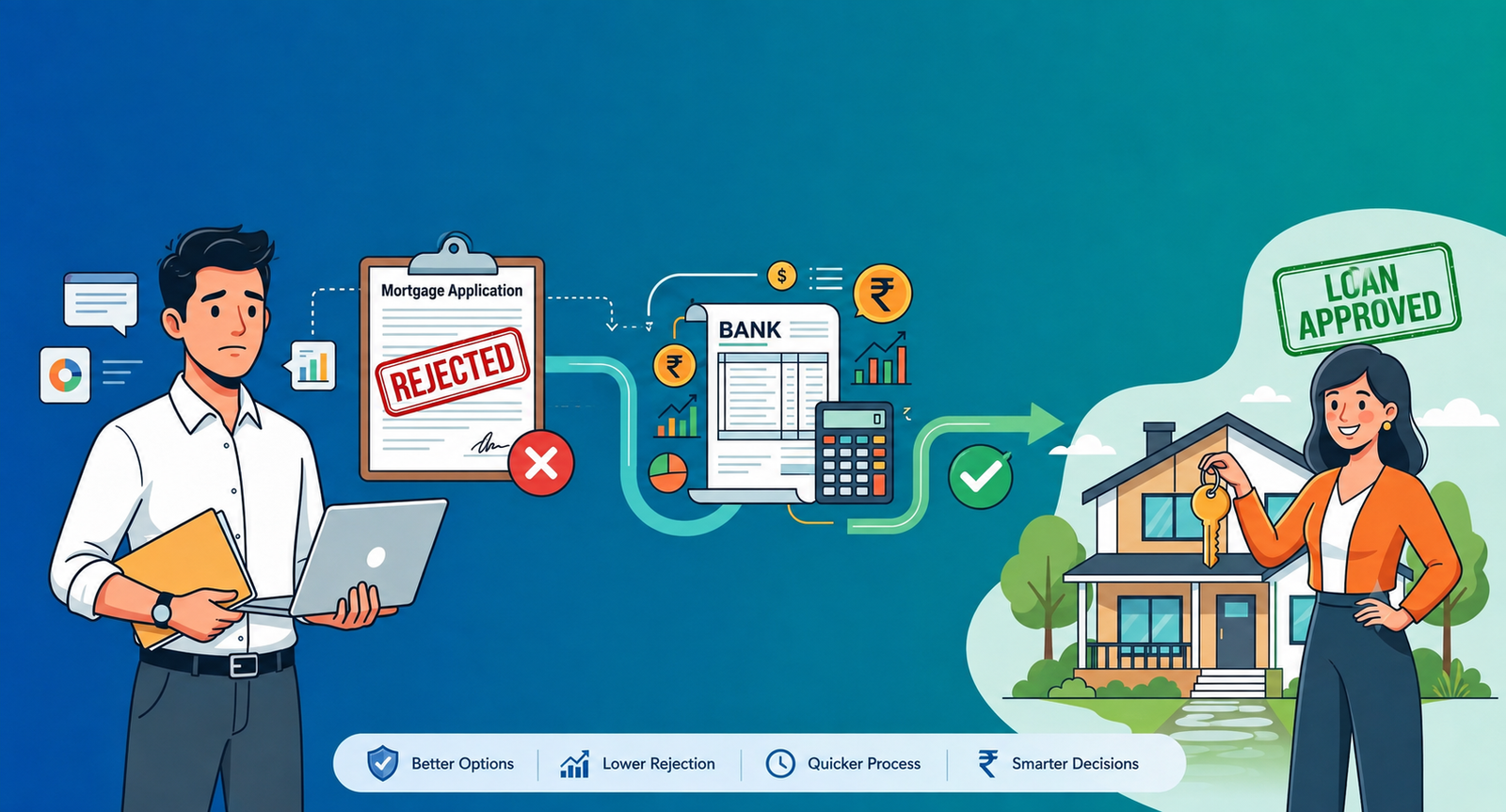
If you run your own business, work as a freelancer, or handle independent contract work, you already know the freedom that comes with being your own boss. You set your hours, pick your customers, and create something meaningful, but when you apply for a home loan, that freedom can suddenly feel like a brick wall. It’s one of the most frustrating things in real estate, because your business is thriving, your bank accounts look solid, and you pay everything on time, but then a traditional lender sends you a rejection letter.
You are not alone in that kind of frustration. Millions of dedicated entrepreneurs, Realtors, consultants, gig workers, and doctors paid through an LLC run into this exact barrier every single year. The upside is that a mortgage rejection from a traditional bank does not automatically mean you cannot buy a home. Usually it just means you got reviewed with a rigid framework that was built mostly for standard W-2 employees, not for today’s business owners.
Why Traditional Mortgage Underwriting Fails Self-Employed Borrowers
When a lender evaluates a W-2 employee, the process is pretty straightforward because they lean on predictable pay stubs and gross pre-tax income. For self-employed borrowers, standard underwriting guidelines change a lot, by asking for two full years of tax returns and then focusing almost exclusively on your net taxable income. That’s the number left over after every allowable write-off, deduction, and operations expense has been taken out.
Think for a moment about how you manage your business finances. On the advice of capable accountants, you naturally take advantage of legal tax deductions, so you reduce your tax obligation and keep more revenue. A freelance graphic designer or a general contractor might bring in $150,000 in gross revenue, but after subtracting equipment, mileage, office space, and marketing, their tax return may end up showing a net income of only $45,000.
While that strategy saves thousands of dollars at tax time, standard mortgage systems only see that lower net figure. They evaluate your ability to repay based on paper earnings rather than true cash flow, making it look as though you cannot afford the home you want. You end up penalized simply for managing your business efficiently.
How Bank Statement Loans Work
So what does a lender look at instead? Instead of forcing your business into a traditional W-2 framework, alternative options exist specifically for modern working professionals. A bank statement loan is an alternative income mortgage designed for business owners who maintain healthy cash flow despite having low taxable income on paper.
These fall under the umbrella of non-QM loans, which are mortgages that do not follow rigid government-backed guidelines. Rather than demanding tax forms, lenders qualify you by evaluating your actual bank deposits over the past 12 to 24 months.
Here is how lenders calculate your qualifying cash flow:
1. You provide bank statements
You supply 12 to 24 consecutive months of personal or business bank statements for review.
2. The lender calculates average deposits
Instead of reviewing tax write-offs, the lender totals your eligible deposits to establish your true monthly gross income.
3. An expense factor is applied
If using business statements, lenders apply an industry-standard expense estimate. A low-overhead consultant receives a lighter expense factor than a heavy equipment contractor.
That calculated revenue figure becomes your working income to prove you can comfortably manage the monthly mortgage payment.
Who Benefits Most From This Approach?
Imagine you run an online e-commerce store generating $300,000 annually. After inventory costs, shipping fees, and equipment depreciation write-offs, your tax returns show modest earnings. A standard bank might decline your application instantly, but evaluating your customer deposits directly reveals your actual purchasing power.
Or think about a real estate agent whose earnings ebb and flow with seasonal sales. Standard underwriters often view fluctuating income with skepticism, but reviewing 12 to 24 months of bank deposits averages out those high and low months to show consistent annual financial health.
This alternative documentation path works across many self-employed business structures:
- Online business owners and freelancers who take substantial home office and operational write-offs.
- Consultants and Realtors whose earnings arrive in larger, variable payouts throughout the year.
- Contractors and gig workers operating as sole proprietors without standard pay stubs.
- Medical professionals and practice owners paid through an LLC or S-Corp structure.
Even if you want to grow a portfolio with investment properties, alternative documentation options make it possible to qualify while self-employed without sacrificing your tax strategies.
Common Misconceptions, Pros, and Cons
Because these programs differ from standard bank products, a few persistent myths surround them. The biggest misconception is that a bank statement mortgage is unsafe or subprime. In reality, modern non-QM guidelines still require thorough verification of financial health, including credit checks and documentation of your liquid reserves.
Another misconception is that interest rates are extraordinarily high. While rates on a self-employed mortgage are typically slightly higher than standard conventional rates to account for manual underwriting, the difference is often modest. For most business owners, paying a slightly higher rate to buy a home today makes far more financial sense than waiting years and overpaying in taxes just to satisfy conventional guidelines.
Why borrowers choose them
- Qualify based on real cash flow rather than net paper income.
- Keep taking legitimate business tax write-offs without ruining homebuying plans.
- Avoid providing complex personal and business tax documentation.
A few things to keep in mind
- Down payments are often higher, usually starting around 10% to 20%.
- Lenders usually want to see extra savings left in the bank after closing.
- Credit score requirements remain firm, generally starting in the mid-600s.
Before making an offer, it helps to understand both the loan requirements and the upfront costs that come with closing on a home.
Finding the Right Fit for Your Business
Choosing the right financing comes down to evaluating your complete financial picture and long-term real estate goals. If your tax returns already show plenty of net taxable income to qualify, standard conventional financing will likely offer lower rates and smaller down payment requirements.
However, if legal tax write-offs lower your taxable income below your true spending power, exploring a bank statement mortgage is often the most practical step forward. If you are also expanding into real estate investing, you might look into specialized options like DSCR loans for rental properties, which evaluate property cash flow rather than personal earnings. Working with a lender who understands self-employment helps you compare options side by side so you can choose a path that fits your business reality.
Understanding Mortgage Options With Lucky Home Loans
Every self-employed borrower has a different financial story, and the right mortgage often depends on how that income is earned and documented. Lucky Home Loans helps business owners, freelancers, and independent contractors explore financing options that better reflect real cash flow instead of relying solely on taxable income. Whether you’re comparing different mortgage programs or looking into bank statement loans, understanding how each option works can make it easier to choose the one that fits your financial goals.
Frequently Asked Questions
What is a bank statement loan?
A bank statement loan, kind of an alternative documentation mortgage, lets self-employed borrowers qualify using monthly deposits from their bank instead of relying on tax returns. It basically looks at actual cash flow, not just net taxable income, so it works well for business owners who have major legal tax deductions and might otherwise look “lower” on paper.
Can self-employed borrowers qualify without tax returns?
Yes, self-employed borrowers can get a home loan even if they don’t hand over personal or business tax returns, through alternative programs. In most cases, lenders review 12 to 24 months of bank statements to show income stability and repayment ability, basically by looking at the full picture of cash flow.
How many months of bank statements are required?
Usually, these bank statement mortgage programs ask for either 12 or 24 straight months of business or personal bank statements. Offering 24 months can help, sometimes it results in better interest rates because it signals long-term financial consistency to the underwriter.
Are bank statement loans harder to qualify for?
Not exactly. Bank statement loans usually aren’t automatically harder, but the underwriting rules are different than standard W-2 loans. Lenders check deposit patterns, the daily account balances, and business overhead, and they still expect a strong credit score plus a reasonable down payment.
What credit score is needed for a bank statement loan?
Most lenders want a minimum credit score somewhere around 620 to 660 for a bank statement loan, although higher scores usually open the door to better rates. Down payment targets commonly sit around 10% to 20% depending on your credit picture and liquid reserves
Who benefits most from a bank statement mortgage?
Entrepreneurs, freelancers, independent contractors, gig workers, and self-employed business owners who take full advantage of tax deductions usually benefit most. It can also help them demonstrate.